What Makes Scottie Scheffler's Swing So Repeatable (and What You Can Steal From It)
The footwork looks chaotic, the results are anything but. A closer look at the most reliable golf swing of this era, and the two pieces amateurs can copy.

Jan Kuijpers · Founder of Narrows Golf
June 10, 2026 · 2 min read

For years, television commentary treated Scottie Scheffler's footwork as a quirk to be survived: the sliding right foot, the heel spinning out through impact, the sense that the lower body is improvising while the upper body plays a different tune.
Then he spent season after season atop the strokes-gained charts, and the conversation flipped. The question stopped being "how does he get away with it?" and became "what does he understand that we don't?"
The engine is not the feet
Watch the swing from face-on and ignore the feet entirely. What you see is one of the most stable relationships in professional golf: the trail arm, chest and club move together, in sequence, at the same rhythm on every single swing, driver or wedge, Tuesday or Sunday.
The feet slide because of that stability, not despite it. Scheffler generates enormous rotational force through the ball, and rather than blocking it with a braced lead leg, he lets the excess energy release into the ground. The footwork is an exhaust pipe, not an engine.
The clubface is the whole story
The number that explains Scheffler is clubface control. His face-to-path variance is among the tightest ever measured on tour. In plain terms: his bad swings and good swings deliver a nearly identical clubface, so his misses stay in play while other players' misses find hazards.
That is what "repeatable" actually means. Not that the swing looks the same, but that the delivery is the same.
Two things worth stealing
Most of Scheffler's swing runs on talent and ten thousand hours. Two pieces, though, transfer directly to amateur golf:
1. The grip-first setup. Scheffler builds his grip with painstaking care before he ever addresses the ball, and never adjusts it afterwards. Most amateurs regrip subtly at address and mid-swing. Copy the discipline, not the swing: grip, then aim, then swing, never the reverse.
2. Rhythm over positions. Ask his coach and you will hear about tempo, not angles. Scheffler's transition takes the same time with every club in the bag. The cheapest speed drill in golf is swinging a mid-iron at 80 percent while keeping your exact rhythm. Most players find the ball goes further, because the strike improves more than the speed drops.
The lesson
The most reliable swing of this era breaks half the rules your first instructor taught you. What it never breaks is sequence, face control and rhythm. Chase those three, let your own exhaust pipe rattle however it wants, and your golf will get boring in the best possible way.
Photo: Chris Waugaman, CC BY-SA 4.0, cropped

Keep reading
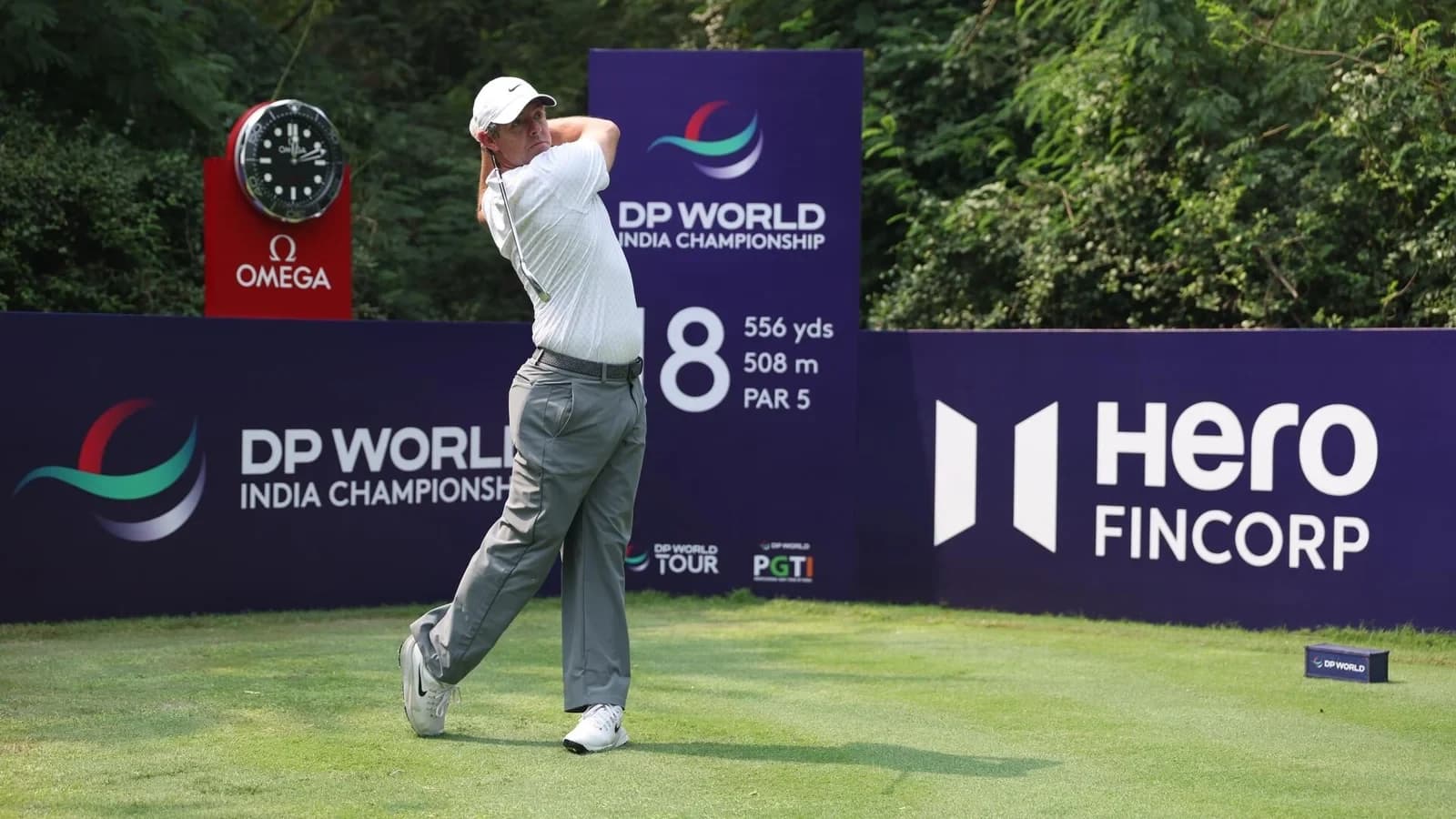
Rory McIlroy trades slim fit for wide trousers in India
Rory McIlroy has given his familiar tapered golf look a roomier update at the DP World India Championship, inspired by Tommy Fleetwood and the heat in Delhi.
By Jan Kuijpers · October 16, 2026

Blades Brown makes history: a PGA Tour card at 19
A closing 69 at the Korn Ferry Tour Championship made Blades Brown, aged 19 years, 4 months and 20 days, the youngest player ever to reach the PGA Tour through its development circuit.
By Jan Kuijpers · October 13, 2026

Five golf prodigies with a story: the talents on the road to the PGA Tour and DP World Tour
A WNBA pioneer's son, a left-handed record-breaker and a talent whose journey ran from Kyiv through Belgium and France. These are five young golfers worth following now.
By Jan Kuijpers · October 5, 2026