Five golf prodigies with a story: the talents on the road to the PGA Tour and DP World Tour
A WNBA pioneer's son, a left-handed record-breaker and a talent whose journey ran from Kyiv through Belgium and France. These are five young golfers worth following now.

Jan Kuijpers
October 5, 2026 · 10 min read
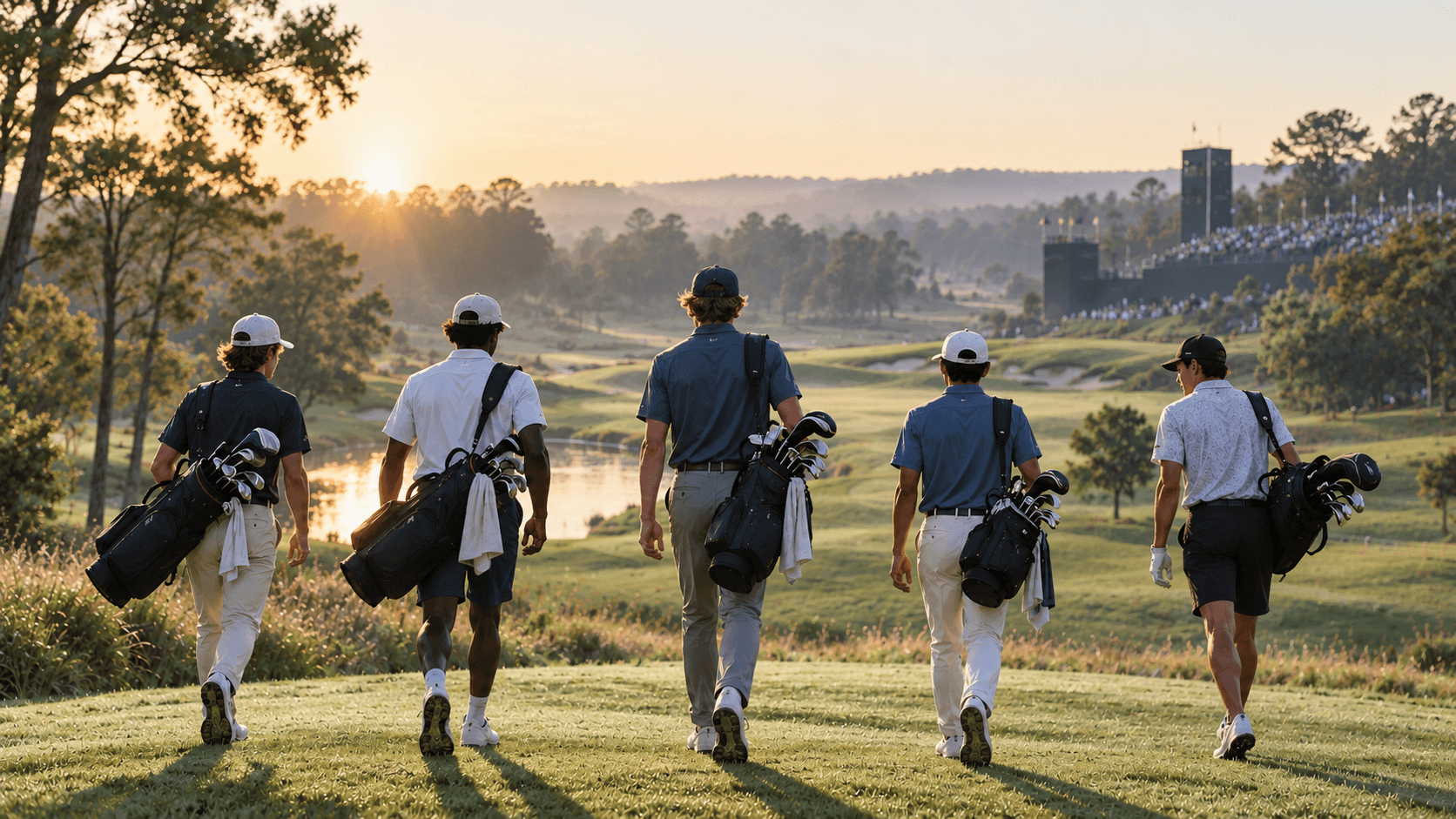
Few labels in golf are as seductive, or as dangerous, as prodigy. Every generation is assigned a new Tiger Woods. It usually happens before the player is old enough to rent a car, let alone travel as a professional for 40 weeks a year.
Still, some young golfers are worth watching early. Not because their futures are settled, but because they have already shown something rarer than a pretty swing on Instagram: they can score in fields full of adult professionals. And with the most interesting prospects, the story behind the results reaches far beyond a low handicap.
This is not a ranking, and it is not a prediction of five future major champions. These are five players aged 19 or younger who do not yet hold a permanent place on the PGA Tour or DP World Tour, but have a credible path to one. Blades Brown could make that step this week. Jaden Soong may still be years away.
Blades Brown, 19: raised on elite sport and perspective
His name alone sounds as if it were designed for a leaderboard. But the Blades Brown story did not begin with marketing. It began with his mother, Rhonda Blades Brown, the former Vanderbilt point guard who made the first three-pointer in WNBA history in 1997.
Brown appears to have inherited something from her that no swing analysis can measure: he seems to grow when the stage gets bigger. At 16, he became the youngest stroke-play medalist in U.S. Amateur history, breaking a record Bobby Jones had held for 103 years. In his first PGA Tour start, also at 16, he made the cut.
Those results carried a different meaning at home. Brown's father, Parke, was initially told in 2022 that he had bone cancer and only months to live. Further tests showed that he had hairy cell leukemia, a rare form of the disease that is treatable but not curable. When Blades reached the weekend at the 2024 Myrtle Beach Classic, Parke spoke emotionally about how much it meant simply to be standing beside the course. In a short period, the family had learned that another season should never be taken for granted.
Brown did not wait for the conventional American route. He skipped college golf and turned professional at 17. In 2026, he proved that the choice was more than impatience. He shot 60 at The American Express, finished third at the Puerto Rico Open and recorded seven top-25 finishes in 11 PGA Tour starts. In June, he accepted Special Temporary Membership on the PGA Tour.
The final formal step comes this week. Brown enters the Korn Ferry Tour season finale inside the top 20 on the points list. If he remains there after Sunday, he will earn a full PGA Tour card for 2027 and become the youngest player to do so through the Korn Ferry Tour.
Why follow him? Because his story is no longer only about potential. Brown has repeatedly shown that he can score against PGA Tour players. Now he must finish a full season with something tangible on the line.
Miles Russell, 17: the left-hander refusing to rush
Golf coach Ramon Bescansa did not really want to take on a six-year-old pupil. Then he watched Miles Russell hit one chip. The technique was sound, the strike was pure and Bescansa decided that he could work with this kindergartner after all.
Russell broke par for the first time that same year. At nine, he reached the Drive, Chip & Putt final at Augusta National. At 14, he won both the Junior PGA Championship and the Junior Players Championship. One day after his 15th birthday, he became the youngest winner of the AJGA Player of the Year Award, displacing Tiger Woods from the record book.
The striking thing is that Russell did not dominate his peers because he developed early into a physical phenomenon. He was smaller than many of the players he faced. His advantage was in his hands, his short game and his understanding of ball flight. That is why Bescansa compared him more readily to Brian Harman than to a young power hitter.
At 15, Russell became the youngest player to make a Korn Ferry Tour cut. He immediately finished tied for 20th. Two years later, he qualified for the 2026 U.S. Open at Shinnecock Hills. He made the weekend again and finished tied for 39th, becoming the second-youngest player since World War II to make the cut in the championship.
That would make a quick move into professional golf seem inevitable, but Russell is not rushing. He remains an amateur, sits first in the current AJGA ranking and has committed to Florida State for 2027. This summer, he also reached the U.S. Junior Amateur final. He lost heavily, a useful reminder that even the best junior in America can still lose a junior tournament.
Why follow him? Because Russell presents a fascinating modern question: what do you do when your game is already approaching Tour level, but your body, education and life are still developing? His patience may eventually matter as much as his left hand.
Lev Grinberg, 18: from Kyiv through Belgium to Le Golf National
Lev Grinberg was born in Kyiv and started playing golf at five. At 10, he left Ukraine to continue his development in Belgium. He later moved to France, where he began living and training at the national performance centre at Le Golf National in early 2023.
Before he arrived there, Grinberg had already introduced himself to European golf fans. At 14, he made the cut at the Soudal Open on the DP World Tour. Two years later, he received an invitation to the Open de France on the course where he was now living. He opened with a 66, only one shot behind the early leaders, and finished tied for 37th as the leading amateur.
That looks like a straight line upward, but his identity stretched across three countries. Grinberg remained connected to Ukraine, developed as a player in Belgium and built his daily life in France. He received French citizenship at the end of 2025. In April 2026, the French golf federation presented him with his first national-team jacket. He spoke openly that evening about his ambitions: winning titles for France, competing for majors and one day earning an Olympic gold medal.
A few months later came the first major confirmation under his new flag. Grinberg won the St Andrews Links Trophy on the Old Course and then collected enough points in The Open Amateur Series to earn a place in The Open at Royal Birkdale. He missed the cut, but at 18 he was the youngest player in the field. He now plays college golf for Arkansas.
The beauty of Grinberg's route is that every stop makes sense without being predictable. Kyiv gave him the game, Belgium gave him room to develop, France provided a home base and America must now prepare him for professional life. The French golf federation has regarded him as one of the best players of his age for years, but has not pushed him into an early professional career.
Why follow him? Because he has the clearest natural path to the DP World Tour of these five. He has already performed on European Tour courses, owns a game that travels in the wind and is choosing development over haste.
Kris Kim, 19: his mother is also his coach
Kris Kim never had to explain why he wanted to spend so much time on a golf course. His father, Ki Yong, played professionally on the Fiji Tour. His mother, Ji-Hyun Suh, was one of the Korean pioneers on the LPGA Tour in the 1990s. She gave him his first lessons at five and remains his swing coach.
That makes their relationship unusual. Many leading prospects see a coach a few times a month and exchange videos in between. Kim can ask a question about his swing over breakfast. His mother understands not only his technique, but also the tension of a Tour week and the loneliness of playing poor golf far from home.
Everything appeared to click at once in 2023. Kim won the Boys' Amateur, the European Boys' Individual Championship and the McGregor Trophy. At the Junior Ryder Cup at Marco Simone, he went undefeated and contributed 3.5 points to the European team. In singles, he beat Miles Russell 5&4.
A year later, the 16-year-old received an invitation to The CJ Cup Byron Nelson. Kim did not talk only about gaining experience. He said before the event that he wanted to make the cut. He did exactly that. Rounds of 68 and 68 made him the youngest player in 11 years to reach a PGA Tour weekend. Later that summer, he made his DP World Tour debut at The Belfry.
At that point, Kim appeared to be leaning towards a rapid move to the professional tours. His path then became quieter. In the summer of 2026, he chose Arizona State, one of the strongest college programmes in America. It gives him time to grow physically and compete against older elite players every week, without every missed cut immediately affecting his income or status. Arizona State announced his arrival in August.
Why follow him? Because Kim's story is not only about early records. It is also about having the confidence to change course. The teenager who once wanted to turn professional as quickly as possible has chosen a longer education. It may look like a detour. For a 19-year-old, it may be perfectly timed.
Jaden Soong, 16: the wild card who reached U.S. Open final qualifying in middle school
Jaden Soong is the youngest and most speculative name in this group. He has not yet made a cut on a professional tour and does not need to choose between college and professional golf any time soon. That is exactly why he is interesting.
In 2023, Soong was a 13-year-old seventh grader when he entered a local U.S. Open qualifier. He made a 12-foot putt in a playoff and advanced to final qualifying, where adult tour professionals competed over 36 holes for places in the major. He did not qualify, but became a name beyond junior golf in a single day.
One year later, he proved it had not been a charming one-off. At 14, Soong won the 125th SCGA Amateur Championship by five shots. He became the youngest champion in an event whose roll of honour includes Tiger Woods, Patrick Cantlay and Sahith Theegala. His closing 66 was bogey-free. That may be the most revealing detail of all: not his age, but the absence of panic while competing against much older players for a major amateur title.
In July 2026, Soong won the Junior PGA Championship. A three-shot swing on the 17th hole turned a deficit into a lead, and he eventually won by one. He now sits second in the AJGA ranking and will not graduate from high school until 2028.
Why follow him? Because nobody yet knows what kind of player he will become physically. His composure and scoring ability are years ahead of his age, but his body and game can still develop in many directions. Soong has the longest road ahead of these five, which may also give him the greatest capacity to surprise.
Who is closest to a real breakthrough?
Brown is the easy answer. He could own a full PGA Tour card within a week and has already produced more top-20 contention than some players with years of experience. Russell may have the highest ceiling, but is deliberately choosing the amateur route. Grinberg looks best prepared for European conditions. Kim is using Arizona State to regain momentum after an early explosion. Soong is not yet a forecast, but he is a name worth writing down.
The important point is that their careers do not have to take the same shape. The PGA Tour and DP World Tour are full of former prodigies who arrived too early, and late bloomers who would not have appeared on any list like this at 19.
Follow these five not so you can later claim their success was inevitable. Follow them to see how differently talent develops when family, background, education, illness and ambition all travel onto the course with it.
Image: AI-generated for Narrows Golf.
Keep reading
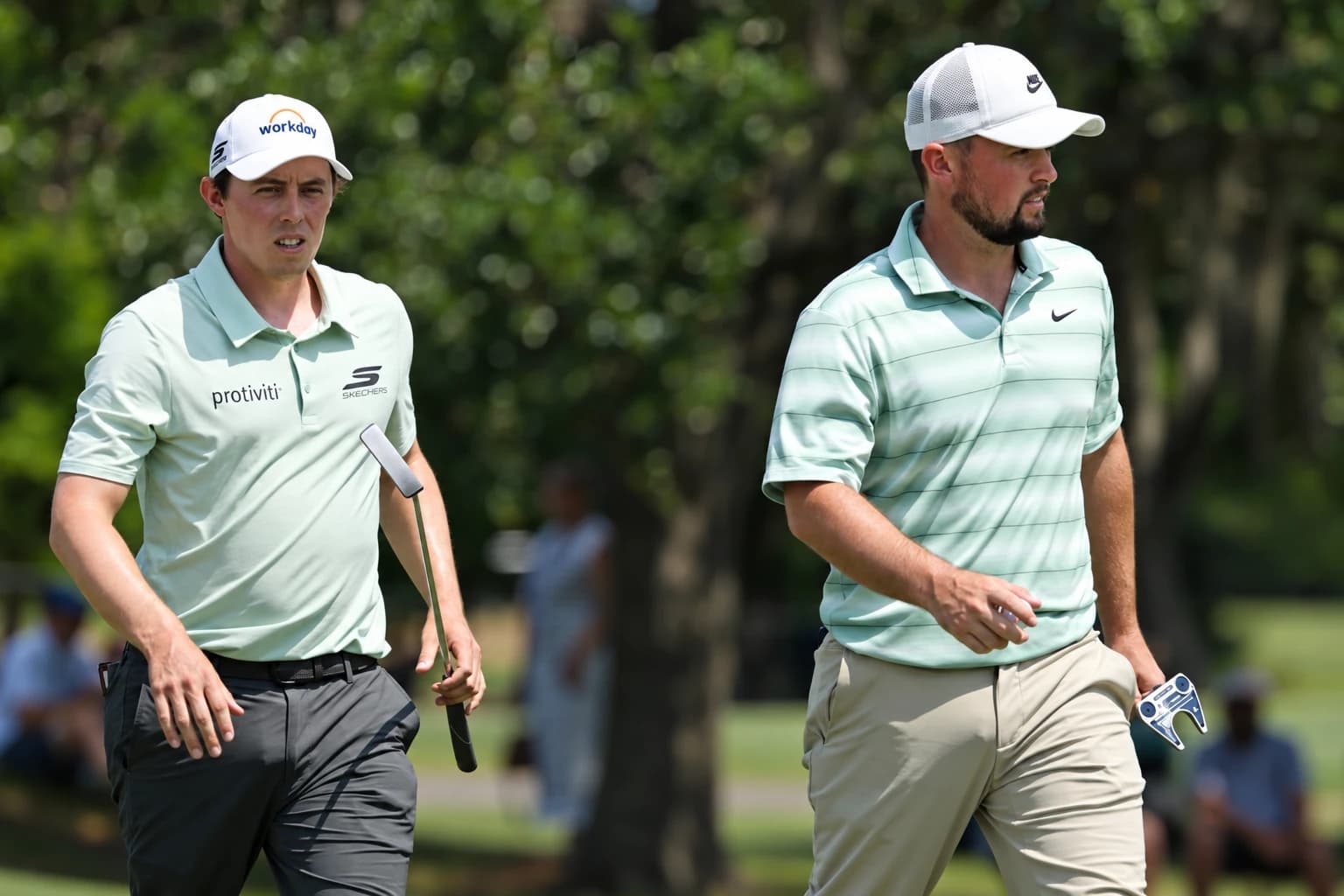
Together Again: Matt and Alex Fitzpatrick target the 2027 Ryder Cup
After a historic win together and the best seasons of their careers, the Fitzpatrick brothers now want to represent Europe side by side at Adare Manor.
By Jan Kuijpers · October 2, 2026
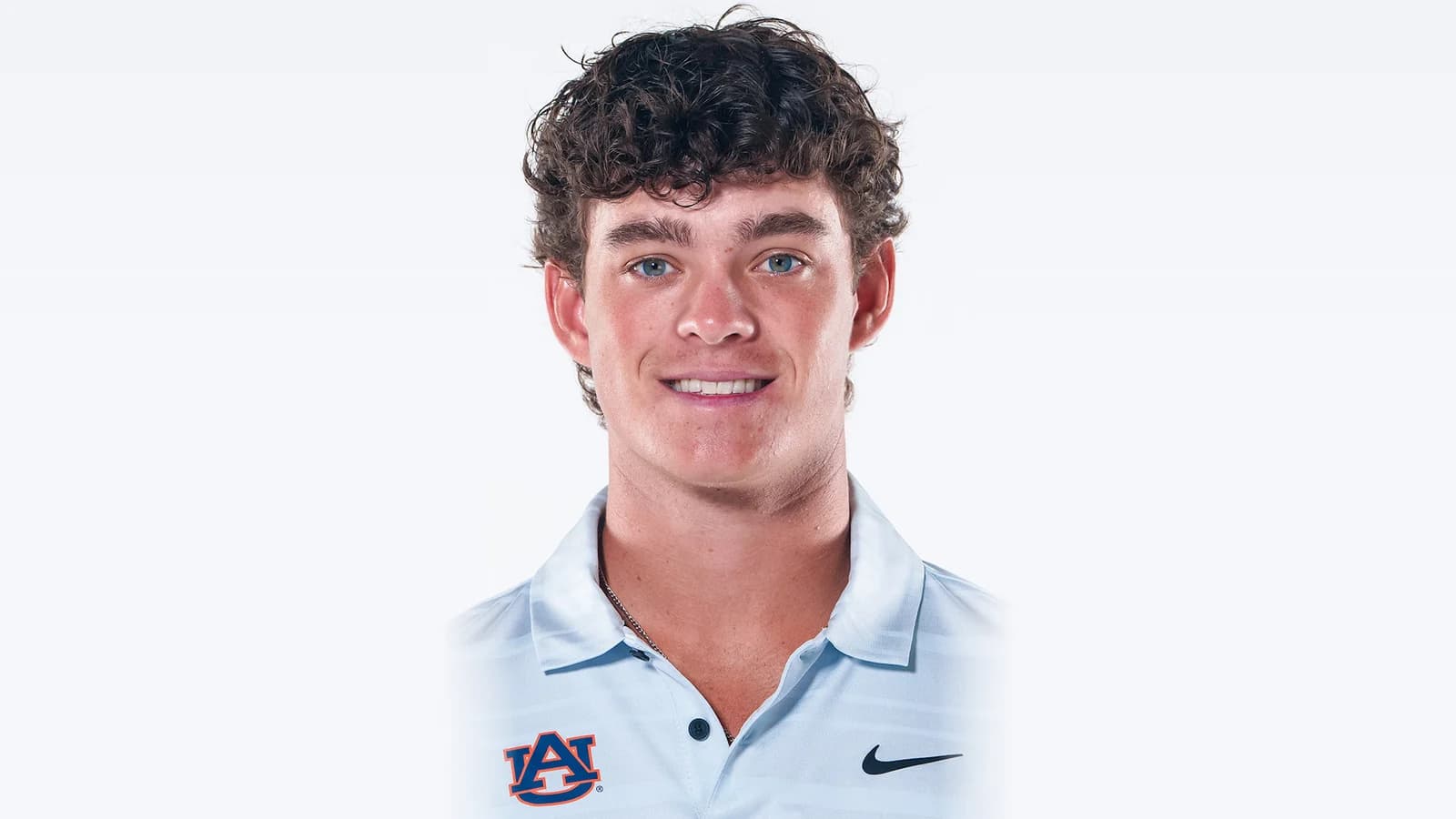
Jackson Koivun: The Only Child From San Jose Who Won on the PGA Tour 24 Days After Turning Pro
A nine-hole course in San Jose, a pandemic-era move to North Carolina, an online senior year and three record seasons at Auburn. How Jackson Koivun became the youngest player on this week's US Presidents Cup team.
By Jan Kuijpers · September 23, 2026
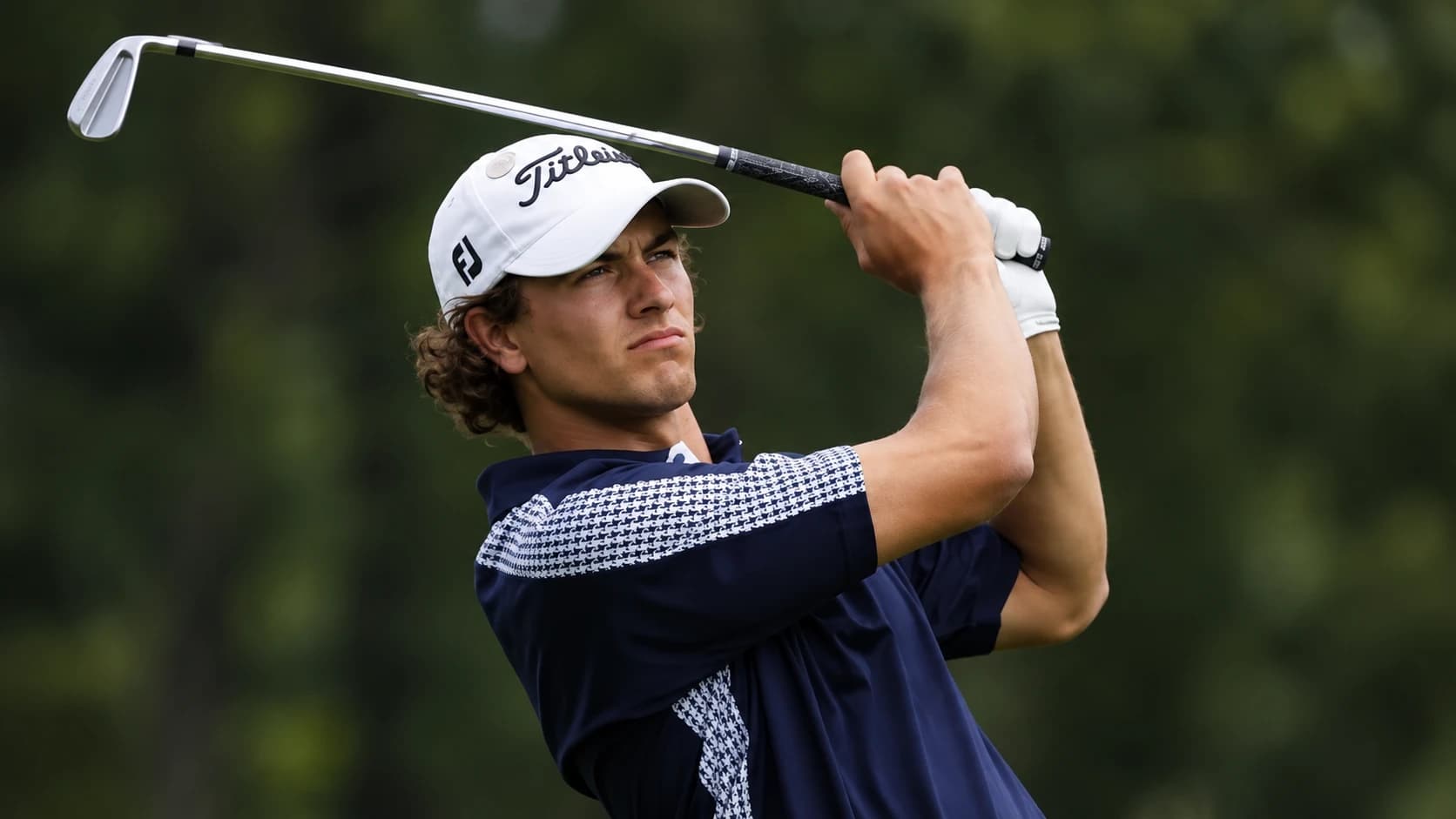
From Collapse to Green Jacket: Adam Scott Is Back Near the Top at Wentworth at 46
In 2012 Adam Scott handed away The Open with four straight bogeys. Nine months later he became the first Australian to win the Masters. Thirteen years on, he is among the leaders at Wentworth again.
By Jan Kuijpers · September 18, 2026