The Good Good x Callaway Ad: What Happened, and Why the Fallout Was This Fast
In seven days Good Good lost a Callaway partnership, a PGA Tour title sponsorship, its retail shelf space and a Golf Channel series. A timeline of the ad, the apologies and the consequences.

Jan Kuijpers · Founder of Narrows Golf
August 31, 2026 · 5 min read
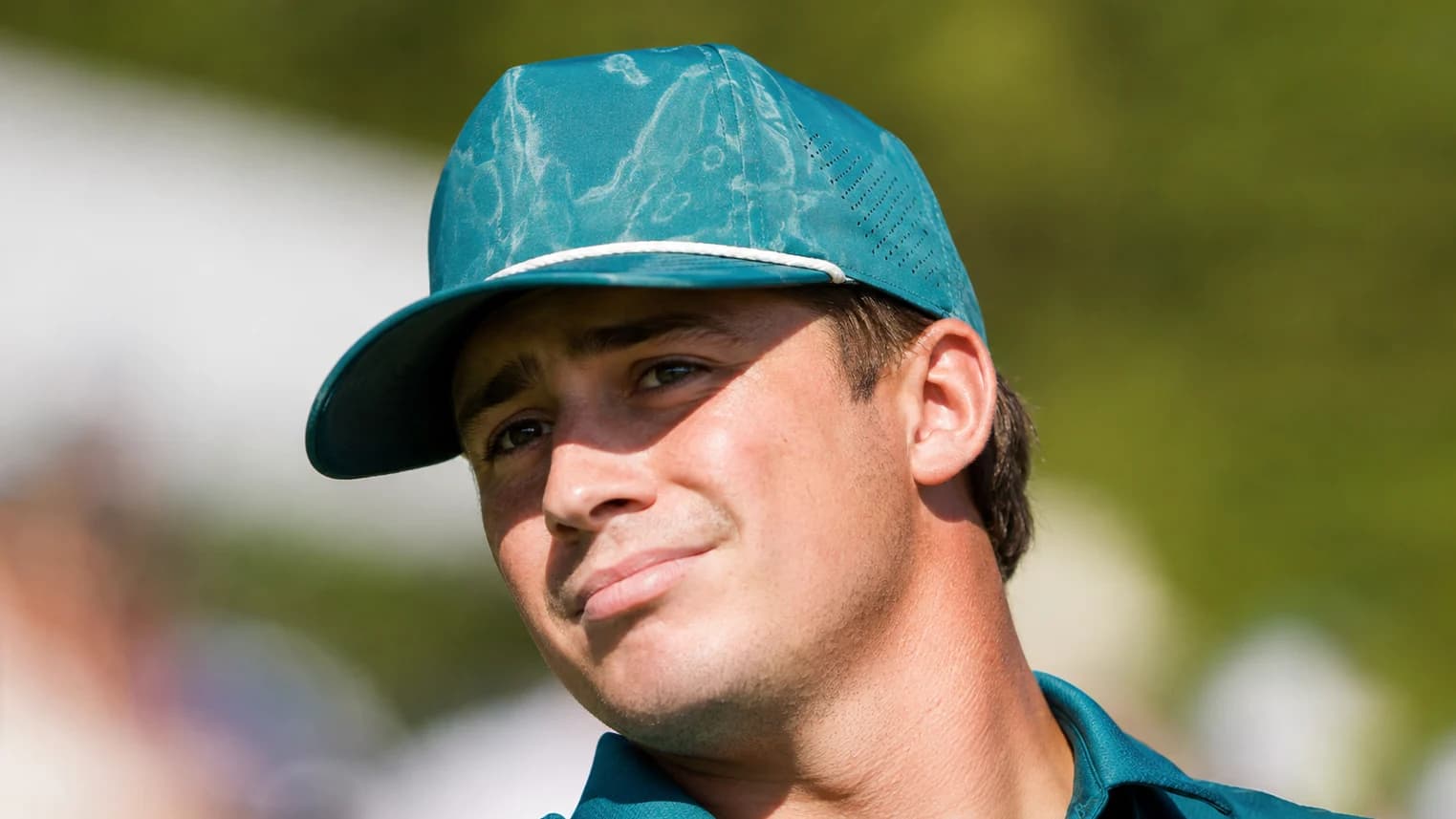
Good Good spent five years building the biggest audience in golf outside a television contract. It took about seven days to lose the partnerships that audience was worth.
The trigger was a 60-second advertisement for a co-branded Callaway driver. What followed was the fastest sponsorship unwind the creator side of golf has seen.
What the Good Good x Callaway ad actually showed
The video promoted the Callaway Quantum driver in a Good Good co-branded edition. In it, Good Good co-founder Garrett Clark shoves fellow creator Alexis Miestowski, a former NCAA Division I golfer, to the ground as she reaches for the club, with the line "Do not touch my new driver."
Good Good later explained the concept as a parody of a scene from the 2026 horror film Obsession, built on the idea that the driver possesses anyone who touches it. That framing did not survive contact with the audience. Without the horror reference, which the ad never established on screen, viewers saw a man knocking a woman to the ground over a golf club, played for laughs.
Callaway's own account of the approval chain is the detail that turned a creator problem into an industry problem. CEO Chip Brewer confirmed that although Good Good produced the video, Callaway approved it before it was posted.
Timeline: seven days from upload to collapse
Friday 21 August. The video goes live and starts circulating across social platforms. Criticism builds within hours.
Saturday 22 August. Good Good posts a short apology to X in the mid-afternoon. Callaway follows with a two-sentence statement. Both are widely read as too brief and too defensive, and the reaction gets louder rather than quieter.
Monday 24 August. Both companies move into full crisis management. The video is pulled from all channels and Callaway removes the driver listing from its website.
Tuesday 25 August. Chip Brewer issues a fuller apology in the early hours: "I want to make it clear that we sincerely apologize for the video." Good Good CEO Matt Kendrick posts his own on LinkedIn: "I own the mistake. The execution missed the mark." That evening Golf Channel postpones the premiere of Big Break x Good Good after sponsor Golf Galaxy asks for its branding to be removed.
Wednesday 26 August. Dick's Sporting Goods and Golf Galaxy start pulling Good Good merchandise from shelves, with PGA Tour Superstore and Target following. PGA Tour CEO Brian Rolapp calls the content "concerning" and "clearly not aligned with PGA Tour values", and describes the initial response as defensive and late. That evening Garrett Clark releases an apology video of roughly eight and a half minutes, calling the concept "super dumb" and saying much of the criticism was justified. He also asks viewers to stop sending abuse to Miestowski, who had been receiving threatening messages over an ad she appeared in but did not commission.
Thursday 27 August. Callaway terminates the three-year partnership with immediate effect and commits one million dollars to organisations working to prevent violence against women. Hours later, Good Good steps away as title sponsor of the Good Good Championship, the new PGA Tour fall event scheduled for Austin from 12 to 15 November. Golf Channel then cancels the Big Break x Good Good season outright.
Why the reaction was this severe
Three things stacked on top of each other.
The first is the subject matter. An ad that stages violence against a woman as a punchline does not get graded on intent. Callaway's own statement made that point: this is not a topic to trivialise, and no explanation of the horror-parody concept changes what the footage shows.
The second is the response. The initial three-sentence apology arrived a day after the video, said little, and left the impression that both companies were managing a public relations irritation rather than answering for a decision. Rolapp's criticism of that response was as pointed as his criticism of the ad itself, and by the time the fuller apologies came, retailers had already started acting.
The third is the retail exposure. Good Good is not only a channel. It sells apparel through Dick's Sporting Goods, Golf Galaxy, PGA Tour Superstore and Target, and it had a PGA Tour title sponsorship and a Golf Channel series in the calendar. Every one of those partners had a decision to make in public and a competitor watching. PXG and Takomo were running counter-advertisements within days.
What it means for creator golf
It would be easy to file this as a story about golf's establishment finally getting to discipline the YouTube generation. That reading does not hold up. Callaway approved the ad. Its CEO said so. The failure was a joint one between a 40-year-old equipment manufacturer and a five-year-old media company, and the manufacturer had the larger compliance apparatus and used none of it.
What the week actually exposed is a mismatch of speed and scale. Creator content is built to be made fast, posted fast and judged fast, and that model produced an enormous audience precisely because it skips the layers that slow traditional marketing down. Attach that model to national retail distribution, a tour title sponsorship and a broadcast series, and the missing layers stop being an advantage. A bad video on a channel costs a few days of comments. The same video with four retail chains and a tour attached costs the retail chains and the tour.
The creator scene is not going to shrink because of this. The audience numbers that made Good Good worth a Callaway deal have not moved. But the terms are going to change: approval chains, brand safety clauses and the kind of review that traditional agencies charge for and creators have historically treated as friction.
We wrote in June that YouTube golf had stopped being a side show. This is what the other side of that looks like. When you are big enough to carry a tour event's name, you are big enough to be judged like one.
Keep reading
Joost Luiten chases $680,000 top prize in India
Joost Luiten starts the final round of the DP World India Championship in pursuit. This is the prize money at stake in New Delhi.
By Jan Kuijpers · October 18, 2026
Rain, Wind and Short Days: Golf Simulators Are Having Their Season
As the weather turns, more golfers book a bay instead of a tee time. We compared what a simulator subscription costs at Kings Golf, NEXT Golf, Flight Golf and Club Birdies.
By Jan Kuijpers · October 11, 2026
Open de España 2026: Sergio García starts one shot back after opening 67
Sergio García is one behind Eugenio Chacarra, Connor Syme and Grant Forrest in Madrid after a first round shaped by a broken toe, two eagles and Jon Rahm's late withdrawal.
By Jan Kuijpers · October 9, 2026